
Florida is a paradise for people — and for mold. Year-round humidity, afternoon thunderstorms, and a long hurricane season create ideal conditions for mold inside homes, and building features like slab foundations, stucco exteriors, and nonstop AC only make it worse.
The straight answer: professional mold remediation in Florida typically costs $500 to $6,000, depending on size and severity. Full-house jobs on severe contamination can exceed $10,000. These are typical 2026 market ranges, not guarantees — the only way to know your actual cost is a professional on-site inspection.
Mold Remediation Cost by Job Size
Small, Contained Jobs
The most common scenario: a patch of mold in a bathroom corner, under a kitchen sink after a slow leak, or a small section of drywall where rainwater has been seeping in. The affected area is usually under 10 square feet, contained to one spot, and hasn’t spread behind walls.
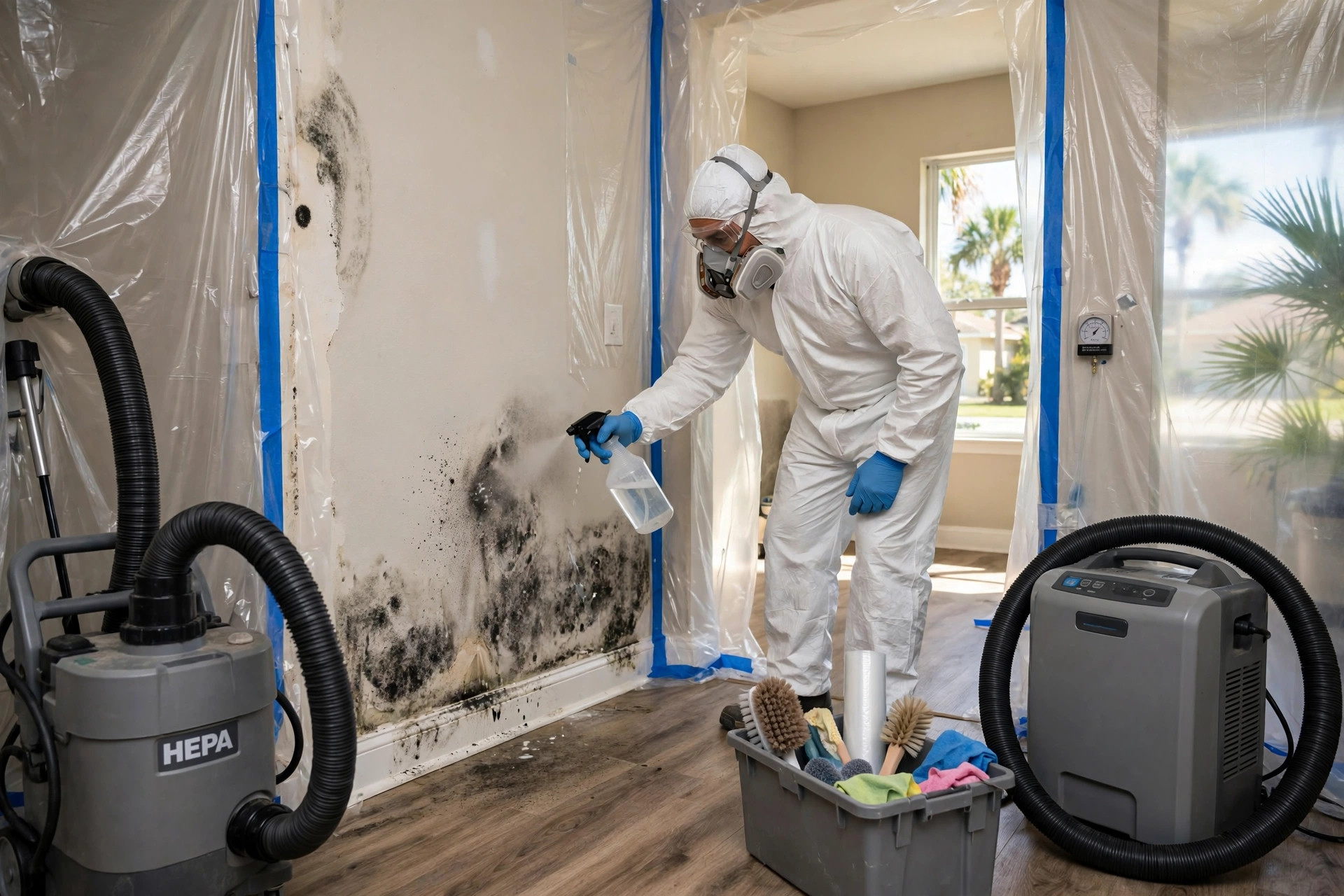
A small job typically includes containment, HEPA-filtered air scrubbing, removal of contaminated material, and antimicrobial treatment of surrounding surfaces. Most finish in a single day.
Medium Jobs
Mold has spread across a room or two — an entire bathroom wall, the back of kitchen cabinetry after a supply line leak, or attic sheathing above a poorly ventilated bathroom. Florida AC systems are a frequent culprit here: condensation on uninsulated ductwork in hot attics feeds mold across surprisingly large areas.
This level usually covers partial drywall or insulation removal, structural drying, treatment of studs and framing, and sometimes material replacement. Expect one to three days of work.
Large / Whole-Room Jobs
An entire room or multiple areas — a flooded room after a hurricane or tropical storm, mold throughout a crawl space, or growth across several garage walls. Full containment barriers, negative air pressure systems, and extensive demolition and rebuild work drive the cost.
In North Central Florida, we see this most after hurricane season water intrusion, when damp drywall sits unaddressed for weeks, or in crawl spaces where standing water and humidity go unnoticed for months.
Full-House Remediation
Severe, widespread contamination — mold in the HVAC system plus multiple rooms, or a home that sat vacant with no AC through a Florida summer. These jobs involve whole-home containment, duct remediation or replacement, and significant material replacement throughout.
Key Cost Factors That Move Your Price
What’s Included in a Professional Quote
A legitimate quote from a licensed Florida mold remediator should itemize: inspection and assessment, containment (physical barriers plus negative air pressure), HEPA air filtration, removal of contaminated materials, cleaning and antimicrobial treatment of salvageable surfaces, structural drying, repairs and replacement — and post-remediation verification confirming the job met clearance standards.
If a quote is vague about containment or verification, ask questions before signing.
Red Flags in Suspiciously Cheap Quotes
If a quote comes in dramatically below these ranges, something is off:
- No containment planned. Real remediation seals off the work area. Skipping this spreads spores through your entire home.
- “Just spray and paint over it.” Spraying over active mold without removing contamination is a cover-up, not remediation.
- No mention of the moisture source. If the cause isn’t addressed, the mold returns — and you pay twice.
- No verification or clearance. A company that won’t verify its own work isn’t confident in it.
- Unlicensed work. Florida requires specific licensing for mold-related services. Cheap operators often skip it.
Failed cheap remediation means paying for the same job twice, plus the damage the returning mold caused in between.
DIY vs. Professional: When Each Makes Sense
When to call a professional:
- The affected area exceeds 10 square feet
- Mold is inside walls, ceilings, HVAC ducts, or under flooring
- The growth followed flooding, storm damage, or sewage backup
- You smell mold but can’t find the source
- Anyone in the household has allergies, asthma, or a compromised immune system
- Mold keeps returning after DIY attempts
Florida’s AC systems deserve special attention: mold in ductwork or air handler cabinets spreads spores through every room with each cycle. Never a DIY job.
How to Get an Accurate Mold Remediation Quote
- Get an on-site inspection. Phone estimates can’t measure what’s behind walls. A real inspection uses moisture meters — sometimes thermal imaging or borescope cameras — to find hidden contamination.
- Ask for an itemized written quote with containment, removal, treatment, drying, repairs, and verification as separate line items.
- Confirm the moisture source is addressed — leak, condensation, drainage, or intrusion — and how it gets fixed.
- Check licensing. Confirm the company’s Florida mold remediation license is current.
- Compare scopes. The middle quote with the most detailed scope is usually the right choice.
FAQs
Most Florida homeowners pay between $500 and $3,500 for a typical residential job. Small contained jobs land near the bottom; multi-room jobs with material replacement near the top. Severe whole-home situations can exceed $10,000. These are typical ranges — your inspection determines your actual cost.
Sometimes. Most policies cover remediation if it’s caused by a covered peril — for example, mold from a burst pipe or a storm-damaged roof. Gradual leaks, neglected maintenance, and humidity-driven growth are typically excluded. Coverage often has a sub-limit (commonly $10,000) even when it applies. Check your policy’s mold provisions and document the water damage source carefully.
A small job can be done in a day. Medium jobs take one to three days. Large or whole-home projects can take a week or more, especially with structural drying or reconstruction. Your contractor should give you a timeline at inspection.
For small, contained jobs, usually yes — proper containment keeps the rest of your home unaffected. For large-scale or whole-home remediation, especially when the HVAC system is involved, temporary relocation is often recommended.
Control moisture and you control mold. Keep indoor humidity below 60% (Florida homes typically need a well-maintained AC or dehumidifier), fix leaks immediately, vent bathrooms and dryers outside, clean AC drain lines regularly, and address storm intrusion within 24–48 hours. After hurricane season, inspect your attic, crawl space, and lower walls for dampness.
The Bottom Line
Mold remediation in Florida typically runs $500 to $6,000, with most homeowners paying $500 to $3,500 for a standard job. The final number depends on the affected area’s size, how deep the contamination goes, whether water damage repair is needed, and whether testing is included. Cheap quotes that skip containment or verification cost more in the long run — in Florida’s humidity, mold that isn’t fully remediated always comes back.
If you’ve found mold in your Gainesville, Ocala, Lake City, or Alachua home — or suspect it’s hiding behind walls after a leak or storm — get a professional inspection before it spreads. Visit our mold removal service page to see how we work, or call us at Call Now — Free Consultation for a free assessment and an honest, itemized quote.
Licensed & Insured | IICRC-Aligned Process | North Central Florida